Mastering Claude Code Auto Mode: Your Guide to Autonomous Coding with Human Oversight
Overview
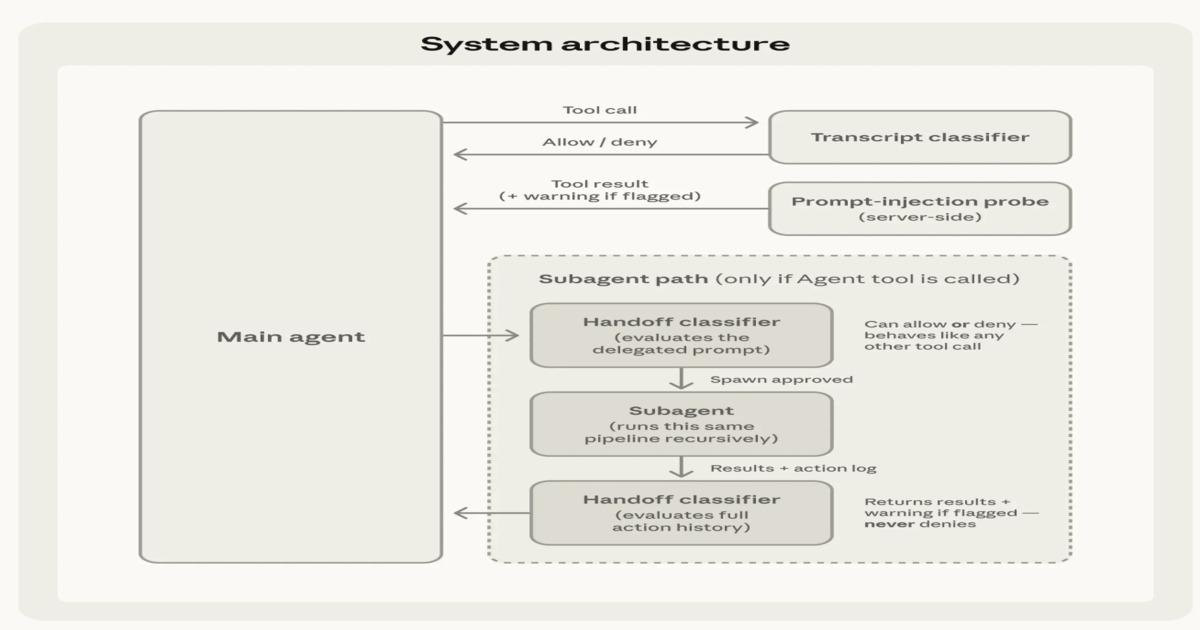
Anthropic's Claude Code Auto Mode introduces a paradigm shift in software development, allowing developers to delegate multi-step coding workflows to an AI while preserving critical human control. This feature automates sequences of actions—from refactoring code to running tests—by employing a sophisticated safety architecture: input filtering, action evaluation, and two-stage classification. Crucially, it enforces human approval gates for sensitive operations like file deletion or deployment. In this guide, you'll learn how to set up, configure, and run workflows in Auto Mode, along with best practices to avoid common pitfalls.
Prerequisites
Environment Setup
- An active Anthropic API key with Claude Code access (Auto Mode requires a paid tier).
- Python 3.9+ installed (for using the
claude-codeCLI or library). - A project directory with version control (git) to safely track AI-generated changes.
Understanding the Safety Layers
Before diving in, familiarize yourself with Auto Mode's guardrails:
- Input Filtering: Scans user prompts for malicious or disallowed patterns.
- Action Evaluation: Each proposed action is assessed against project context and risk categories.
- Two-Stage Classification: Actions are first classified as safe or sensitive; sensitive actions trigger a human approval step.
Step-by-Step Instructions
Step 1: Initialize Claude Code with Auto Mode
Open your terminal in the project root and run:
claude-code init --auto-modeThis command installs the required configuration file (.claude-config.yml) and sets up Auto Mode as the default execution policy.
Step 2: Define a Multi-Step Workflow
Create a task file (e.g., workflow.json) describing the steps. Example:
{
  "steps": [
    {"action": "read", "target": "src/app.js"},
    {"action": "edit", "target": "src/app.js", "instruction": "add error handling middleware"},
    {"action": "run", "command": "npm test"}
  ]
}
Place this file in your project root.
Step 3: Execute the Workflow
Start Auto Mode with:
claude-code auto workflow.jsonClaude will begin processing each step sequentially. For sensitive actions (e.g., editing a critical configuration file), the terminal will pause:
⚠️ Sensitive action detected: edit src/config.json
Approve? (y/n):
You can type y to allow or n to reject. For all other actions, execution proceeds automatically.
Step 4: Monitor Safety Classifications
Watch the logs for two-stage classification results:
[Stage 1] Input filter: PASS
[Stage 2] Action classification: SAFE (auto-approved)
---
[Stage 1] Input filter: PASS
[Stage 2] Action classification: SENSITIVE -> waiting for approval
Step 5: Integrate with CI Pipelines
For automated yet safe CI/CD, use the non-interactive flag with a remote approval service:
/presentations/game-vr-flat-screens/en/smallimage/thumbnail-1775637585504.jpg)
claude-code auto workflow.json --approval-endpoint http://localhost:3000/approveWhen a sensitive action arises, Claude will call your endpoint with action details; your service can respond with a yes/no.
Common Mistakes and Troubleshooting
Missing Human Approval on Sensitive Tasks
Issue: Auto Mode might skip a sensitive step if no approval mechanism is configured (e.g., in headless mode without an endpoint).
Fix: Always either use interactive mode or provide a valid --approval-endpoint. Check the action classification output to verify sensitive actions were handled.
Overly Broad Input Prompts
Issue: Vague instructions like “refactor the entire codebase” can cause the input filter to flag as suspicious or lead to unexpected changes.
Fix: Break down tasks into specific, verifiable steps. Use the workflow JSON format to enforce granularity.
Ignoring the Two-Stage Classification Logs
Issue: Developers sometimes glance over the classification output, missing false positives (safe actions flagged as sensitive) or false negatives.
Fix: Review each classification line. If an action is misclassified, adjust your project's .claude-rules.yml file to whitelist or blacklist certain patterns.
Working Without Version Control
Issue: Running Auto Mode on an unversioned directory means you cannot roll back unwanted changes.
Fix: Always git init (or use another VCS) and commit before running Auto Mode. This also helps the input filter understand project history.
Summary
Claude Code Auto Mode combines the speed of automated multi-step coding with essential human oversight through its layered safety system. By following this guide—setting up prerequisites, defining structured workflows, monitoring classification logs, and integrating with approval endpoints—you can harness autonomous code generation without sacrificing control. Remember to break tasks into small steps, review safety classifications, and always keep a rollback mechanism handy. With Auto Mode, you delegate the execution but retain the final say.