Mastering GitHub Copilot CLI: Interactive & Non-Interactive Modes Explained
Overview
GitHub Copilot CLI brings AI-powered assistance directly to your terminal, helping you generate commands, explain code, or even run tasks without leaving your shell. This guide covers the two primary modes: interactive (a conversational, session-based experience) and non-interactive (a quick, one-shot command). By the end, you'll know exactly which mode fits your workflow and how to use each effectively.
Prerequisites
Before diving in, ensure you have the following:
- A GitHub Copilot subscription (individual, business, or enterprise)
- Node.js (version 16 or later) installed on your machine
- The GitHub Copilot CLI installed via npm:
npm install -g @githubnext/github-copilot-cli - Basic familiarity with the command line (navigating directories, running commands)
- An active internet connection for Copilot to function
Once installed, authenticate by running copilot auth and following the prompts.
Interactive Mode: Conversational AI in Your Terminal
What Is Interactive Mode?
Interactive mode is the default when you launch Copilot CLI. It creates a persistent chat-like session where you can ask questions, review suggestions, and iterate—all while staying inside the Copilot environment. Think of it as having a pair programmer who stays with you until you're done.
How to Enter Interactive Mode
- Open your terminal.
- Type
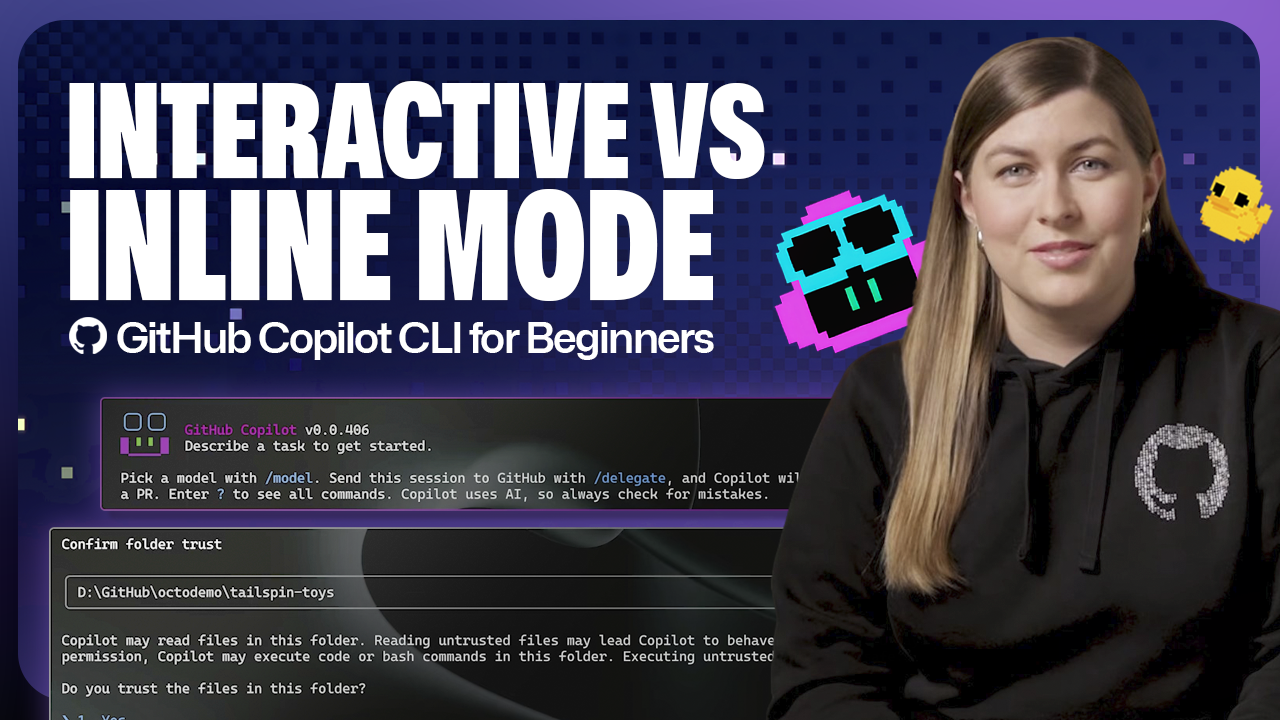
copilotand press Enter. - If prompted, grant permission for Copilot to read and modify files in the current folder. This is necessary for context-aware suggestions.
- You’ll see a prompt (
Copilot>or similar). Now you're in interactive mode.
Working in Interactive Mode
Once inside, you can ask questions naturally. For example:
- “How do I run this project locally?” → Copilot analyzes your project files and gives step-by-step instructions.
- “Can you run it for me?” → Copilot may execute commands directly (with your approval).
- “Explain the main function in
app.js.” → It reads the file and provides a summary.
You can chain follow-ups without losing context. To exit, type exit or press Ctrl+C.
Non-Interactive Mode: Quick One-Shot Answers
What Is Non-Interactive Mode?
Non-interactive mode is for speed. Instead of opening a session, you pass a single prompt directly in the command line with the -p flag. Copilot responds immediately and exits. It’s ideal for quick tasks like summarizing a repo, generating a code snippet, or integrating into scripts.
How to Use Non-Interactive Mode
- Ensure you are not inside a Copilot session (if you are, type
exitfirst). - Type:
copilot -p "your prompt here" - Example:
copilot -p "Quickly summarize what this repository does and the key folders." - Copilot scans the current directory and returns a concise answer. Then control returns to your normal shell.
Practical Examples
- Generate a command:
copilot -p "Find all large files over 100MB in this folder" - Explain a snippet:
copilot -p "Explain what this bash function does" < script.sh - Automated workflow: Pipe output for further processing:
copilot -p "List all running Docker containers" | grep "nginx"
When to Use Each Mode
| Situation | Recommended Mode |
|---|---|
| Exploring a new codebase | Interactive – explore iteratively |
| Writing a one-off command | Non-interactive – quick answer |
| Debugging step-by-step | Interactive – ask follow-ups |
| Automating in a CI/CD pipeline | Non-interactive – script-friendly |
| Learning a new framework | Interactive – deep dive |
Common Mistakes to Avoid
1. Forgetting to Exit Interactive Mode Before Using Non-Interactive
If you run copilot -p ... while inside an interactive session, it may be interpreted as a prompt within that session. Always exit (type exit) first.

2. Not Trusting the Folder
Copilot asks for permission to read/write files in the current directory. If you decline, it won’t have full context. For best results, accept the trust prompt.
3. Overly Vague Prompts
Copilot works best with specific questions. Instead of “help me with this project,” try “Explain the database schema used in models/db.js.”
4. Expecting Non-Interactive Mode to Handle Multi-Step Tasks
Non-interactive is for single-turn questions. For complex workflows, switch to interactive mode or chain multiple non-interactive calls.
5. Ignoring Copilot’s Warnings or Approvals
When Copilot wants to run a command (e.g., start a server), it will ask for confirmation. Always review the command before approving—especially if it modifies files.
Summary
GitHub Copilot CLI offers two powerful modes: interactive for collaborative, exploratory sessions, and non-interactive for fast, single-shot answers. Interactive mode is default and great for deep dives; non-interactive mode (with the -p flag) is perfect for quick tasks and automation. Remember to exit interactive mode before using non-interactive, trust the folder when prompted, and craft specific prompts for best results. With these skills, you’ll navigate your terminal with AI-assisted confidence.