Navigating arXiv's New AI-Generated Content Policy: A Complete Guide to Avoiding Submission Bans
Overview
The arXiv preprint server has become a cornerstone of rapid scientific communication, especially in physics, mathematics, computer science, and related fields. But with the rise of generative AI tools, a troubling trend has emerged: authors submitting papers that are partially or entirely generated by language models, complete with fake citations, nonsensical diagrams, and unedited prompt responses. These so-called "AI slop" papers slip through editorial checks and pollute the peer-reviewed literature.
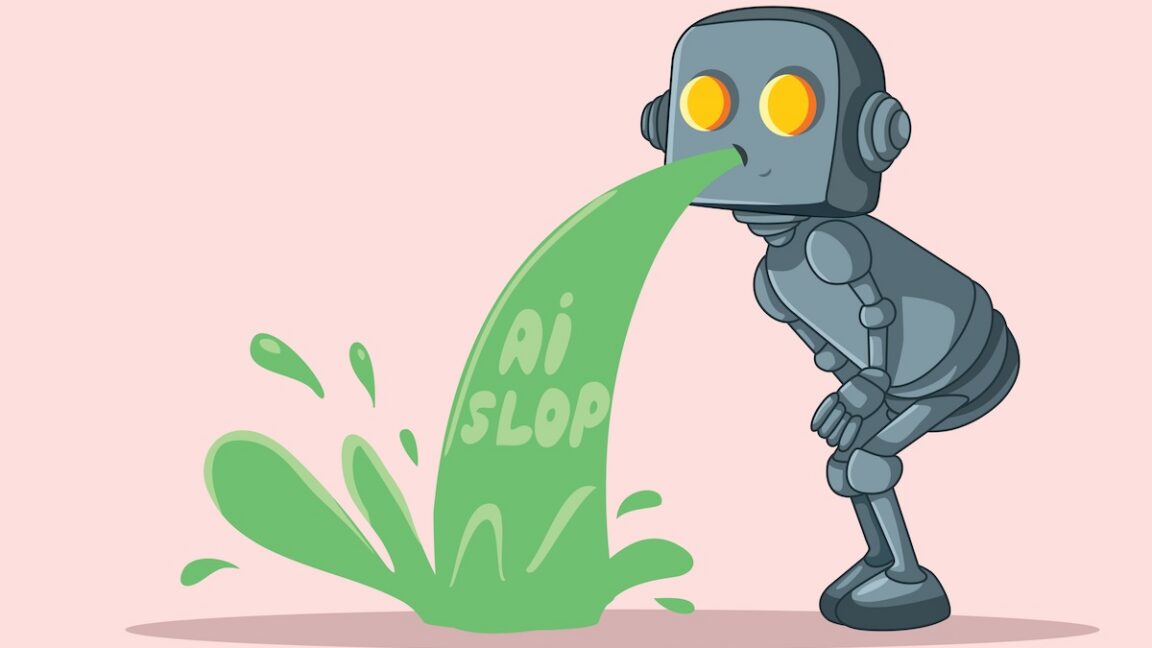
In response, arXiv's moderation team—including Thomas Dietterich, an emeritus professor at Oregon State University and a member of the editorial advisory council—has announced a strict new policy: any submission found to contain inappropriate AI-generated content will result in a one-year ban from future submissions. Furthermore, after the ban lifts, the offending author will be permanently required to have all future papers undergo peer review before arXiv will host them. This guide explains the policy, outlines prerequisites for compliance, and provides step-by-step instructions to ensure your submissions meet arXiv's standards.
Prerequisites
Before submitting to arXiv, you should be familiar with:
- arXiv account and endorsement: You need an account that has been endorsed by a fellow author in the relevant subject area.
- Submission guidelines: Understand the official submission instructions and the policy on AI-generated content (recently updated).
- Ethical use of AI: Know what constitutes acceptable vs. unacceptable AI assistance. In general, using AI to polish language or generate code snippets is fine, but claiming AI-written text as your own original work is not.
- Moderation process: arXiv employs human moderators and automated checks to detect suspicious content. Familiarize yourself with common red flags.
Step-by-Step Guide to Compliant Submissions
1. Preparing Your Submission
Before you upload your manuscript, review it thoroughly. Do not rely solely on AI to write your paper. If you use generative tools for brainstorming or editing, ensure that all generated text is critically reviewed, rewritten in your own words, and properly attributed where necessary. arXiv's policy specifically targets inappropriate AI-generated content—meaning text, figures, or references that are clearly fabricated or nonsensical.
Action items:
- Run each section through plagiarism detection tools to catch unintentional copying.
- Verify all citations manually. AI often invents plausible-looking but false references.
- Check figures for unrealistic axis labels, impossible data trends, or garbled text.
- Ensure that the writing style is consistent (AI models tend to shift tone mid-paragraph).
2. Avoiding AI-Generated Red Flags
arXiv moderators are trained to spot common indicators of AI slop. These include:
- Phrases like "As an AI language model...": If such text remains in the final version, it’s an immediate red flag.
- Repetitive sentence structures: AI often repeats the same syntactic patterns.
- Overly general or vague statements: Lack of concrete details, specific definitions, or novel insights.
- Plausible but fake citations: Check the DOI or journal name—many AI-generated references point to real journals but wrong articles or completely nonexistent papers.
To be safe, treat all AI output as a first draft that requires substantial human rewriting. If you cannot personally vouch for every sentence, your paper may be flagged.
3. Submitting to arXiv
Once your paper is ready, follow the standard submission process:
- Log in to your arXiv account.
- Select the appropriate subject area (e.g., cs.AI, physics.gen-ph).
- Upload your source files (LaTeX is strongly recommended; avoid PDF-only submissions as they are harder to check).
- Fill in metadata: title, authors, abstract, and keywords. Ensure the abstract is original and not AI-generated.
- Submit and wait for moderation. Do not try to bypass checks by submitting multiple versions quickly—this can trigger automatic suspension.
4. What to Do If Your Paper Gets Flagged
If a moderator identifies potential AI-generated content, you will receive an email with a specific reason. You can appeal by demonstrating that the content is human-written or that the AI use was permissible. Provide evidence such as:
- Draft history showing significant edits.
- Original source code for experiments (if applicable).
- Verification of all citations from trusted databases.
- A letter from collaborators confirming human authorship.
If the appeal is denied, the ban period begins. During the ban, you cannot submit new papers, but existing submissions remain online (unless found in violation retroactively).
5. How the Ban and Reinstate Process Works
The announced policy states a one-year ban. After that year, you must follow a permanent requirement: every future submission must have already been peer-reviewed and accepted by a recognized journal or conference before arXiv will host it. This means you cannot post preprints directly; you must wait for formal peer review. To re-engage:
- Contact arXiv moderation after the ban period ends, providing proof of the peer-reviewed publication.
- Submit only accepted papers and include the journal/conference details.
- Continue to adhere to all standard submission guidelines; any further AI infractions could result in a permanent ban.
Common Mistakes
- Assuming that slight editing of AI text makes it acceptable. Even heavy editing may leave traces that trigger automated detectors. Best practice: don’t use AI to generate complete paragraphs; use it only for small assistance (e.g., improving grammar on a sentence you wrote).
- Neglecting to cite AI tools properly. If you used an AI for idea generation, consider mentioning it in the acknowledgments. While not required, transparency reduces suspicion.
- Uploading PDFs with no source files. arXiv prefers LaTeX source because it can be more easily analyzed. PDF-only submissions are more likely to be scrutinized for AI text.
- Ignoring the peer-review requirement after a ban. Some authors mistakenly think the requirement ends after a few years. It is permanent unless arXiv updates the policy.
- Multiple authors from the same account submitting AI slop. The ban applies to the account, so one bad submission from a co-author can affect everyone.
Summary
arXiv's new policy on AI-generated content is a strong deterrent against low-quality, fabricated submissions. The rule is simple: any inappropriate AI-produced material results in a one-year ban and a permanent need for prior peer review. To stay compliant, always treat AI as an assistant, not an author; manually verify every fact and reference; and submit only original, human-crafted work. By following this guide, researchers can continue to benefit from arXiv’s rapid dissemination while upholding scientific integrity.